
At some point soon, the only thing you can trust to be human will be an in-person conversation
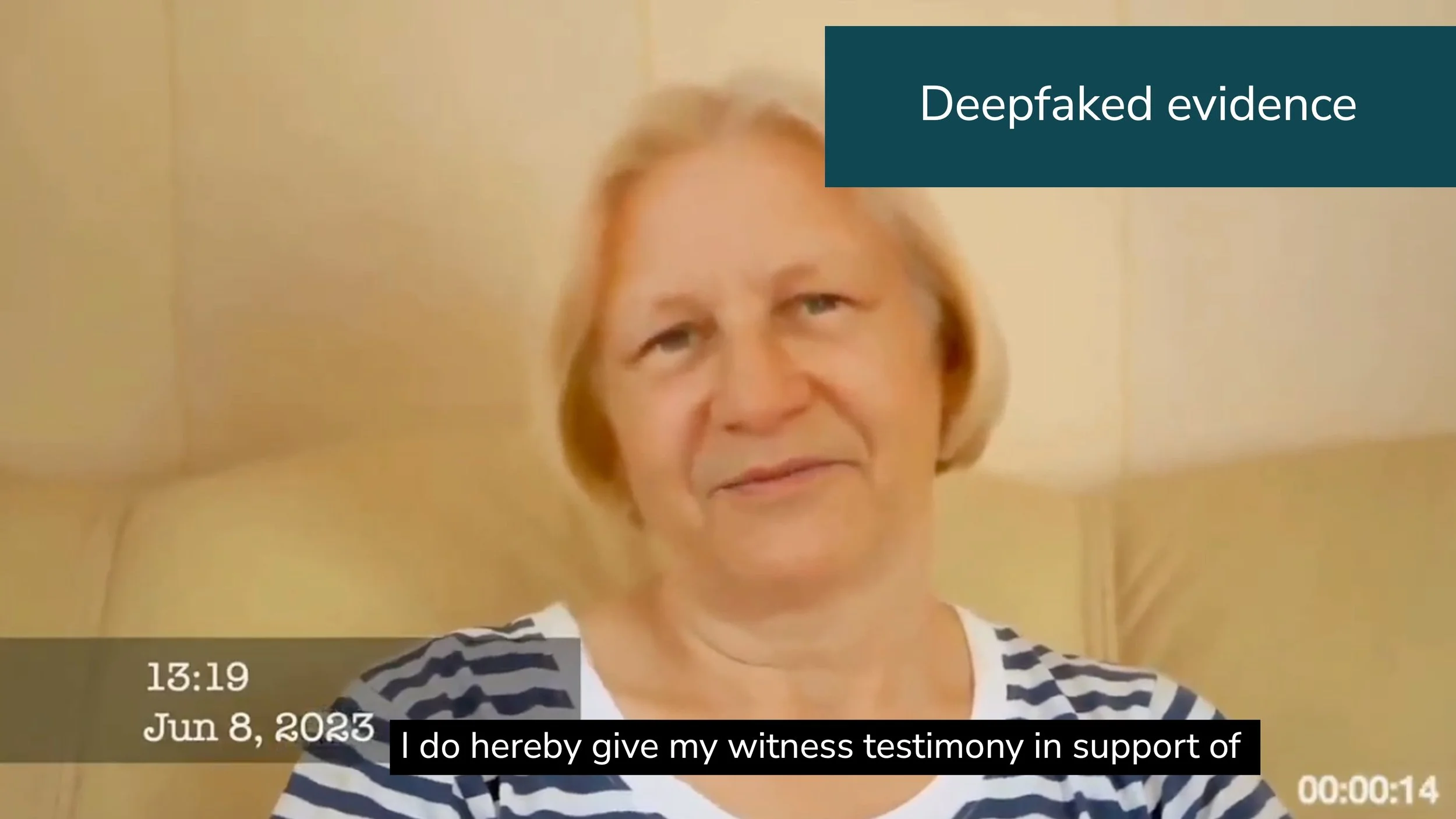
What if one of your direct reports used a deepfaked user research video to drive a business decision?
US courts have just seen their first documented case where a deepfaked video was submitted as evidence. AI-hallucinated court cases in background research have been an issue for years, but this is the first known instance of someone using AI to simulate a first-hand, personal witness statement.
📝 This comes at a significant time for UX, when AI-generated text responses are beginning to overwhelm user research surveys. Figuring out how to reliably detect and avoid fake survey responses has been a hot topic.
🥸 But it’s not just text data–it’s also video. Deepfaked candidates are becoming a bigger and bigger problem on video calls for job screening and college admissions.
How long before we’re consistently seeing deepfaked participants completing usability tests and interviews?
It’s like I said back in March in my talk on Coexisting with AI: “At some point soon, the only thing you can trust to be human will be an in-person conversation.”
As a product leader, does this change how you should allocate budget for tools like UserTesting vs. old-school usability labs?
And how can you get ahead of AI risks like deepfaked research participants?
These are important strategic questions to answer as we look ahead to 2026 and beyond.
👉 If you’re a product strategy leader trying to navigate these questions, I can help. Grab time on my calendar to chat about your needs: https://book.llewyn.net